The short version
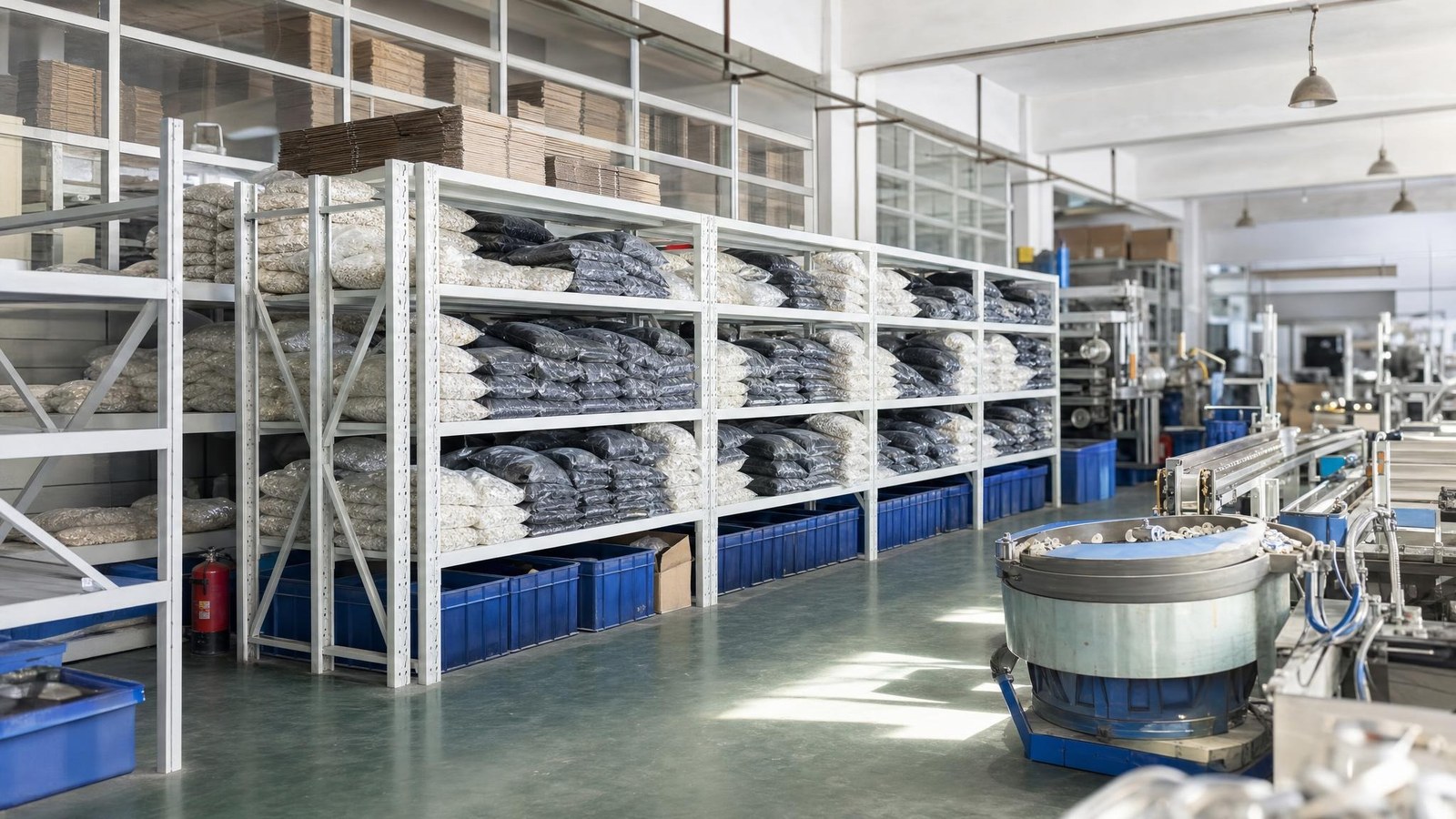
Star Lighting (XD Star) makes lamps and lighting components at one site: its 5,000+ sqm headquarters and production base in Hengli Town, Dongguan, with 100+ production staff and 18+ years in operation. It runs six production stages in-house: mould design and fabrication, PCB assembly, full assembly with inline QC, testing and inspection, packaging, and logistics coordination. Five quality checks sit across those stages: incoming material inspection, in-process QC, 100% electrical safety and performance testing of finished product, extended aging tests and a final inspection before packing. The Vietnam office in Ho Chi Minh City is sales support only and has no production equipment.
Most buyers of LED lamps and lighting components ask two questions before the first order: what does this factory actually make itself, and where does it check the product? A supplier that buys in housings and boards and only assembles them has fewer places to catch a defect than one that builds the mould, places the LEDs and runs the tests under its own roof.
This article walks through Star Lighting's production chain one stage at a time. For each stage it explains what happens, which defects it is designed to stop, and what a buyer can reasonably ask to see. Where the factory does not publish a figure, such as an aging duration or a test voltage, the article says so and suggests the question to ask instead.
What are the six production stages in an LED lighting factory like Star Lighting?
Star Lighting lists six manufacturing capabilities on its factory page. Together they cover the whole path from a tool drawing to a loaded container. The table gives the overview; the sections after it go into each stage.
| Stage | What happens | What it controls | What a buyer can ask to see |
|---|---|---|---|
| 1. Mould design and fabrication | Moulds are designed and built in-house; parts are then injection moulded | Part dimensions, fit between parts, material grade | First-article report against your drawing; material MSDS and flame-retardant report |
| 2. PCB assembly | LED module and PCB SMT assembly lines place and solder components | Solder quality, component placement, LED and driver build | Board samples; how boards are checked before assembly |
| 3. Full assembly | Housing, board, wiring and fittings are assembled with inline QC | Wiring, fastening, cosmetic finish, function | Inline QC checkpoints for your model; a golden sample |
| 4. Testing and inspection | Aging, waterproof and electrical safety testing | Early failures, water ingress, electrical safety | Test method, duration and limits; records for your batch |
| 5. Packaging | Custom packaging design and production | Branding, transit protection, carton marks | Artwork proofs; packed carton photos before dispatch |
| 6. Logistics | Integrated shipping and logistics coordination | Trade terms, routing, documents | Booking details, packing list, export documents |
Star Lighting's six production stages as listed on its factory page, with buyer checkpoints.
All six stages run in Dongguan. That matters for quality, because a problem found at testing can be traced back to the board line or the mould shop in the same building, without waiting for a separate supplier to investigate.
Why does in-house mould design matter when you buy lamps or lampholders?
The mould decides the shape of every plastic part: the lampholder body, the driver housing, the bracket that holds an LED module, the cable clamp. If a mould is out of tolerance or wears unevenly, every part from it carries the same fault. Star Lighting designs and fabricates its moulds in its own workshop, and all mould development and maintenance stays inside the Dongguan facility.
The factory states a library of over 200 active tool sets. New tooling for a custom part typically takes 15-25 days, and a custom LED module bracket for a proprietary PCB size typically 15-20 days. Because the toolroom sits next to the moulding machines, a dimension that needs correcting after the first shots can be adjusted without shipping the tool between companies.
What happens after the mould is built?
Parts are injection moulded in industrial polymers: PC, ABS, PP, PA66 (nylon) and PBT. For lighting parts the factory stocks UL94-V0 flame-retardant grades, and its lampholder series uses heat-resistant PC and ABS rated to a maximum operating temperature of 150°C. Each moulding machine has automated robotic handling, which the factory uses to minimise human variation.
Some parts then pass through secondary processes before assembly: ultrasonic welding, silk-screen printing, pad printing and semi-automated assembly. These let the factory deliver a finished sub-assembly instead of loose parts.
What to ask for at the mould stage
Send a 2D drawing with critical dimensions marked. Ask for a first-article inspection report measured against that drawing, and for the MSDS and flame-retardant test report of the resin grade used. The factory states it provides MSDS and flame-retardant reports on request to support your own product certification.
What happens on the PCB and SMT assembly line?
The second stage builds the electronic heart of a lamp. Star Lighting runs LED module and PCB SMT assembly lines, using automated pick-and-place and reflow soldering equipment. The factory also produces LED drivers and transformers, in constant current and constant voltage versions with built-in surge and short-circuit protection.
In general SMT practice, solder paste is printed onto the board, components are placed by machine, and the board passes through a reflow oven that melts the paste into joints. Typical defects at this point are cold or bridged joints, missing or shifted components, and LEDs placed with the wrong orientation or from the wrong colour-temperature bin.
These faults are cheap to fix on a bare board and expensive once the board is screwed into a metal desk lamp. That is why the in-process QC check, described below, matters most at this stage. Ask how boards for your model are checked before they move to assembly, and whether LED bin information is recorded per batch, since colour consistency across a lamp range depends on it.
How does full assembly with inline QC work?
In the third stage the moulded housing, the populated board, the driver, wiring and hardware come together into a finished lamp. Star Lighting describes this as end-to-end product assembly with inline QC: checks are built into the line rather than left to the end.
Each finished product has its own critical points. A rotating desk lamp head stresses its internal wiring, a battery work lamp needs correct charging behaviour, and a pendant needs secure cable retention.
Inline QC on an assembly line, as general practice, checks the things that cannot be seen once the lamp is closed: wire routing away from sharp edges and hot spots, strain relief on the cord, screw torque, connector seating. Then it checks function and appearance: does the lamp light, dim and switch colour temperature correctly, and is the finish free of scratches.
Agree a golden sample
Before mass production, approve one sample as the reference for colour, finish, light output and function, and keep a matching unit at the factory. Inline and final checks can then compare against a physical standard rather than a description.
What do aging, waterproof and electrical safety tests actually check?
Testing and inspection is the fourth stage. Star Lighting lists aging, waterproof and electrical safety testing, and the factory also states in-house photometric test capability. Each test answers a different question.
Aging test
Aging, also called burn-in, runs finished lamps powered for an extended period. In general LED practice, the point is to make early-life failures happen in the factory: a weak solder joint, a marginal driver component or an LED that fails after hours of heat. Star Lighting describes its aging test as extended runtime testing to ensure product reliability. It does not publish the duration or conditions, so ask how many hours your model runs, at what voltage, and what counts as a fail.
Waterproof test
Waterproof testing is relevant to products used outdoors or in damp places, and to sealing parts such as waterproof cable glands. As general practice, the method and pass level follow the IP rating claimed for the product. If your product carries an IP rating, ask which rating it is tested to and whether the test is run on every unit or on samples from each batch.
Electrical safety and performance test
This is the test Star Lighting applies to 100% of finished product. Electrical safety testing on mains luminaires, in general practice, covers checks such as dielectric strength, insulation and earth continuity for the product's safety class. Performance testing confirms the lamp does what its specification says: switching, dimming, colour temperature modes and charging.
Ask for the test limits, not only the word "tested"
A test record is only useful if you know what it measured. Ask for the test items, the voltage and limit values used, the sample size for any test that is not 100%, and a copy of the records for your production batch.
How are packaging and logistics handled at the end of the line?
Packaging is the fifth stage, and Star Lighting designs and produces it in-house. For OEM and ODM buyers it offers neutral white-box packaging or fully custom colour cartons, with artwork developed around the buyer's brand. Export shipments use reinforced industrial cartons and pallet wrapping as standard.
Logistics is the sixth stage. The factory coordinates shipping on FOB, CIF and DDP terms and ships to 50+ countries. Published sea transit times are 25-35 days from China to the US or Europe, 7-15 days to Southeast Asia, and typically 7-10 days from Dongguan to Ho Chi Minh City. Express shipping is available for urgent orders.
If goods arrive damaged, the factory asks for photos on receipt and then arranges replacement stock, so packing photos taken before dispatch are worth requesting as routine.
What are the five quality checks and what does each one catch?
The six stages describe how the product is made. The five quality checks describe where it is stopped and examined. Star Lighting lists them on its certifications page, and they are placed so that each one catches a different type of fault before it travels further down the line.
| Quality check | Where it sits | What it is designed to catch | Evidence to request |
|---|---|---|---|
| Incoming inspection | Before raw materials enter production | Wrong resin grade, off-spec components, damaged or mixed supplier lots | Incoming inspection record for key materials; material certificates |
| In-process QC | At every critical manufacturing stage | Mould drift, solder defects, assembly errors before they multiply | First-article and patrol inspection records for your order |
| Finished product testing | 100% of finished product | Electrical safety faults and performance failures on each unit | Test items, limits and the batch test log |
| Aging test | After assembly, before final inspection | Early-life failures in LEDs, joints and drivers | Aging duration, conditions and failure count for the batch |
| Pre-shipment inspection | Before packaging and dispatch | Cosmetic defects, wrong accessories, labelling and quantity errors | Final inspection report and packed carton photos |
Star Lighting's five quality checks, with the defect type each one targets.
For moulded plastic parts the factory adds detail: first-article inspection when a run starts, in-process patrol inspection during the run, and 100% outgoing inspection before shipment, aimed at dimensional and visual consistency across batches. The factory describes its quality system as ISO 9001-certified. That certificate is not among the documents shown on its certifications page, so if your procurement rules require it, ask for a copy and check the scope and expiry date.
Which QC records should a buyer ask for before and after production?
A quality process only helps you if you can see its output. The list below is a practical set of requests to make, grouped by when you need them. None of them is unusual for a factory that runs the checks described above.
- Before ordering: the certificate or test report that covers your exact model and target market, and the MSDS and flame-retardant report for plastic parts.
- At sampling: a first-article inspection report against your drawing, and confirmation of which golden sample is the reference.
- During production: in-process QC records for your order, including patrol inspection on moulded parts and board checks.
- After testing: the electrical safety and performance test log, plus aging duration, conditions and any failures found.
- Before shipment: the pre-shipment inspection report, packed carton photos and the packing list.
- After delivery: a clear route for reporting defects or transit damage, with photo evidence.
Agree these requests in writing with the order, not after the goods are packed. Standard products are quoted at 7-15 days after order confirmation and custom products at 20-30 days, which leaves little room to add a reporting requirement late.
How can you check the production process on a factory visit or video tour?
Star Lighting welcomes factory visits by appointment and also offers virtual video tours. A tour is most useful when you go in with a list of things to see rather than a general walk-through. Ask the guide to show you the following, in production order.
- The mould workshop: tools being built or maintained, and how mould maintenance is logged.
- The material store: how incoming resin and components are labelled as inspected, and how flame-retardant grades are kept separate.
- The moulding floor: robotic part handling, and where first-article and patrol checks are recorded.
- The SMT line: pick-and-place, reflow, and the inspection point for finished boards.
- The assembly line: the inline QC stations and the reference sample used at each one.
- The test area: aging racks, the waterproof test set-up and the electrical safety tester, with a sample test record.
- The packing area: carton marking, the final inspection station and how passed goods are segregated from rejects.
If you cannot travel, a video tour in this order gives you the same evidence. As general practice, many importers also appoint an independent inspector for the pre-shipment check; agree access and timing with the sales team in advance.
Is anything produced at the Vietnam office?
No. Star Lighting's office in Ho Chi Minh City supports Vietnam and ASEAN customers with sales consultation, sample coordination, technical guidance and logistics. The company states that it has no production equipment. Every stage and every quality check in this article happens in Dongguan, so that is where inspections, audits and tours take place.
Ask for the QC records for your product
Tell us the product, target market and quantity. Our sales team responds within 24 hours with the relevant certificates, the checks that apply to your model and sample options. Most models start at 50-100 pieces. Ask for the QC records for your product
Frequently Asked Questions
Does Star Lighting test every finished lamp?
Yes. Electrical safety and performance testing is applied to 100% of finished product. Aging, waterproof and other tests are also run; ask which apply to your model and whether they are 100% or sample-based.
How long is the aging test?
Star Lighting describes the aging test as extended runtime testing but does not publish a fixed duration. Ask for the hours, voltage and pass criteria used for your product, and request the aging record for your batch.
Are the moulds made in-house or outsourced?
In-house. Mould design, fabrication and maintenance are all handled within the Dongguan facility, which holds over 200 active tool sets. New tooling for a custom part typically takes 15-25 days.
Can I receive inspection and test records with my order?
Ask for them when you place the order. Useful records are the first-article report, in-process QC records, the finished product test log, aging results and the pre-shipment inspection report with packed carton photos.
Is any production done in Vietnam?
No. The Ho Chi Minh City office provides sales support, sample coordination and logistics for Vietnam and ASEAN customers and has no production equipment. All manufacturing and quality checks take place in Dongguan.
Can I see the production line before ordering?
Yes. Factory visits to Dongguan are possible by appointment, and virtual video tours can be arranged if you cannot travel. Contact the sales team to schedule one.